History
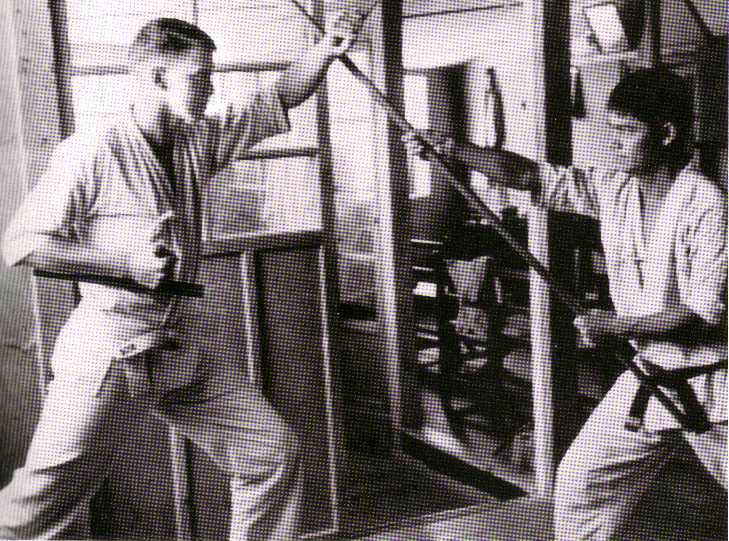
Karate History
There are many martial arts in the world. Throughout human history there has always been a need to defend oneself from aggressors. In the Ryukyu kingdom, which made up the modern-day islands of Okinawa, they practiced their native Te (“hand”) art. Additionally, due to its unique location near both the Asian mainland and trade with other nearby islands, there was a unique melting pot of Chinese, Japanese, and Polynesian influence that contributed to the evolution of Okinawa’s martial arts.
Several times through its history, the Ryukyu islands operated under weapons bans. During the Satsuma Domain (early 1600s-1800s), and again during the Meiji Restoration (late 1800s-early 1900s), when Okinawa officially became a prefecture of Japan, weapons were officially outlawed on Okinawa by the Japanese government. This solidified the need for a weaponless, or “empty-hand”, martial art. Eventually, it drove the various practitioners of Te (“hand”) and To-Te (“Chinese hand”) and all the variations of these martial arts to begin to formalize their styles with names and structures and ranking systems. Before long, Karate began moving from a secret practice, handed down within families, to being offered publicly, in schools and dojos.

In the early days of modern-day Karate (late 1800s-early 1900s), Anko Itosu introduced the five Pinan katas as a physical education program to the high schools in Okinawa. These kata served to introduce novice karate-ka to the forms and techniques that Karate employs for self-defense. Later, in 1940, Master Shōshin Nagamine created Fukyugata Ichi, and Master Chōjun Miyagi created Fukyugata Ni as beginner katas, allowing for a more basic introduction to a person’s Karate practice. In 1947, Master Nagamine formalized his style of karate, Matsubayashi Ryū, marked by natural stances and practical self-defense techniques.
There is a more extensive history of Shorin-Ryu Karate on the USRK USA website.
Ueshiro Shorin-Ryu History
After WWII, American military bases remained on the island of Okinawa, and many U.S. servicemen began studying Karate, including in Master Nagamine’s dojo. In 1962, Master Nagamine sent his chief instructor, Ansei Ueshiro, to the US to begin to spread Okinawan karate in the US mainland. Master Ueshiro arrived on US soil on September 14th, 1962. He began work training new students and opening dojos, first in the midwest, then in New York. Those dojos led to more and more students who spread Master Ueshiro’s particular take on Matsubayashi Ryū, focused on getting low and delivering moves with enormous power.
I am going to teach karate to the American people the way it was taught to me.
Master Ansei Ueshiro, Sept. 9, 1962
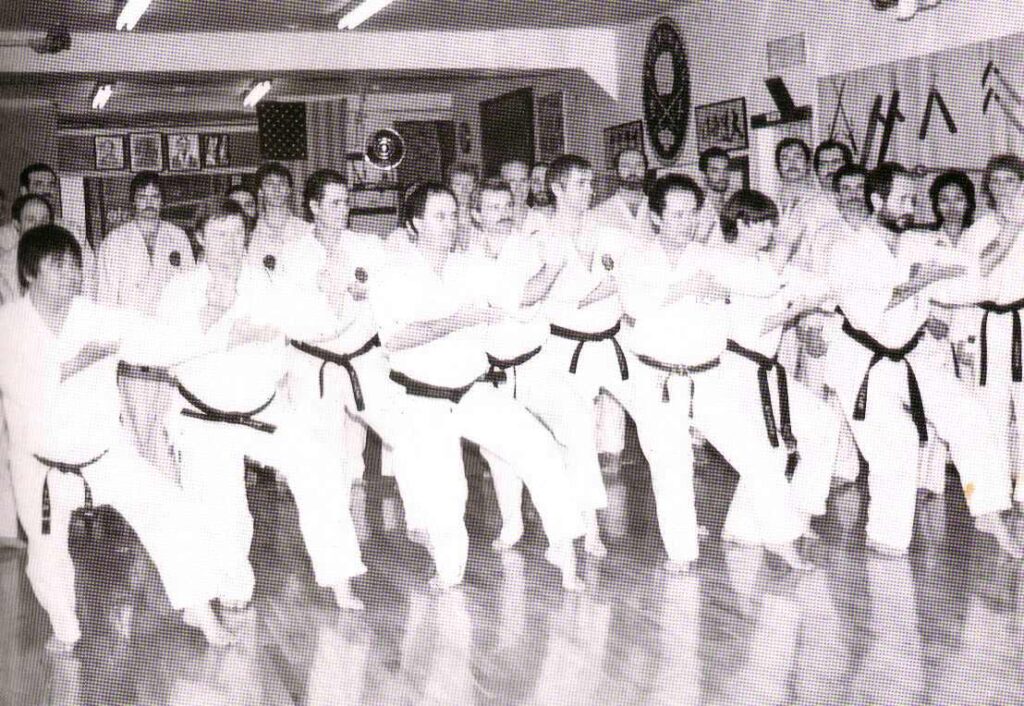

After Master Ueshiro’s passing in May 2002, Hanshi Robert Scaglione was named head of Ueshiro Shorin-Ryu U.S.A. (USRK) Hanshi Scaglione carries on Master Ueshiro’s legacy of an indomitable spirit and powerful karate techniques. Today, the Hombu Dojo (headquarters) remains in New York City, while Hanshi Scaglione and many of his students’ dojos are based in Florida. There are USRK dojos in many other U.S. locations, and some international dojos as well.
Northfield Dojo History

Carleton has had some form of Karate on campus since the 1960s. Our current Carleton dojo was originally founded in 2008 by Sensei Bob Dobrow, Professor of Mathematics and Statistics, Emeritus. After his retirement in 2017, Sensei Steve Hatle took the reins and shepherded the dojo through Sensei Dobrow’s retirement as well as the COVID pandemic. Sensei Hatle remains Shihan (director) of the Ueshiro Northfield Shorin-Ryu Karate dojo, and in 2024, with the encouragement and blessing of Sensei Hatle, Kyoshi Michael Mackay, and Hanshi Robert Scaglione, Sempai David Huyck founded the Ueshiro Carleton Karate Dojo, separate from, but strongly tied to, the Ueshiro Northfield dojo.
Shinden
Our teachers, and our teachers’ teachers, and on into history we call the “Shinden”, or “those who came before.” In our dojo, we recognize our direct lineage back to the island of Okinawa, with photos of six particular people. All of these Karate-ka had other teachers, and we recognize them in many different ways, but this brief list honors the core teachers for each Sensei along the way. Beginning on the right, with Sensei Steve Hatle, his teacher Sensei Bob Dobrow is next to his left, then his teacher, Hanshi Robert Scaglione, then Master Ansei Ueshiro, Master Shoshin Nagamine, and finally his teacher, Ankichi Arakaki.

We often also extend the idea of “Shinden” to anyone who supports our Karate practice, including family, friends, and others who make it possible for us to train. We internalize the Okinawan ideals of respect and courtesy, honoring the humanity and contributions of all who have helped to make us who we are.
Study this well!
Miyamoto Musashi via Hanshi Robert Scaglione
